

New Money, Old Houses, and a Title Race That Will Not Wait for Sentiment
By PSL Editorial Desk · 22 September 2026
Five games, one point between Scottland and Hardrock — and a league where money now decides who starts as favourite while the old giants watch the market.
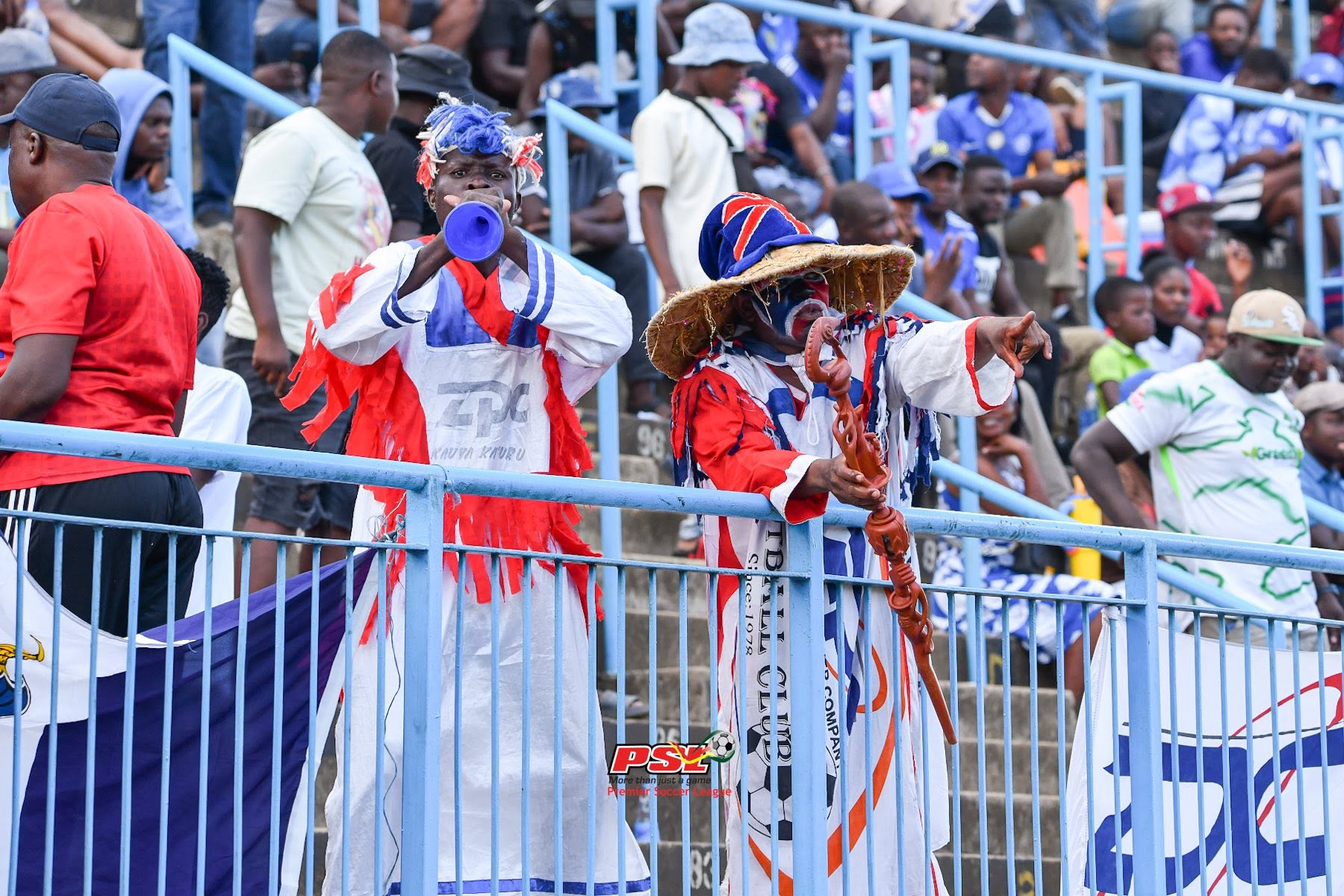
Five matches remain and one point separates Scottland from Hardrock. That is the immediate sporting fact. The larger fact is harder to dress in a fixture list. The clubs that once defined Zimbabwean football are no longer defining its championship. Scottland, champions in 2025 in their first season in the top flight, lead on 61 points. Hardrock, in their first campaign at this level, have 60. Dynamos and CAPS United, the old measures of the domestic game, are close enough to bruise a Saturday and too far away to author one. Highlanders still command a crowd. They do not command the table. The aristocracy has not vanished. It has been lapped.
Scottland's remaining opponents are ZPC Kariba away, Chicken Inn at home, CAPS United away, Herentals at home and Triangle away. Hardrock face Bulawayo Chiefs at home, Dynamos away, MWOS at home, Simba Bhora away and FC Platinum at home. A casual reading favours the leaders. A serious one does not. Scottland have already dropped points against sides still on that list. Hardrock have done the same, and they have already shown, in cup football this month, that they can beat the champions on the day. One point is not a cushion. It is a margin that disappears with a missed penalty or a night of poor concentration. Both clubs have earned the right to be discussed as title sides. Scottland have been the more consistent league team across two seasons. Hardrock have been the more insistent challenger in this one. Neither needs a morality play attached to their results. They need points.
For a generation the league had a settled hierarchy. Dynamos were the popular giant. CAPS United were the urban alternative. Highlanders were the other half of the national argument. Titles circulated among a known group, and when a new name interrupted, it was usually a well-run company side rather than a rewrite of the sport. That settlement has gone. FC Platinum and Ngezi showed that organised institutional backing could build a contender. Simba Bhora showed that a well-supported private project could win the league. Scottland showed that a newly promoted club, properly financed and professionally staffed, could win it at the first attempt. Hardrock are now testing whether that pattern was an exception or the new rule.
The common ingredient is not mystery. It is capacity. The newer challengers can recruit more quickly, plan a pre-season more seriously, and keep a squad together when the calendar turns. The older clubs still possess the larger historic followings. They have too often lacked the quieter virtues: contracts that hold, wages that arrive, and a summer market in which they are buyers rather than spectators. This is not a slight on Dynamos or CAPS United. It is a description of their recent transfer windows. A club may be loved and still be outbid. The two facts can sit in the same sentence.
Money is the largest single advantage available in this league. It is not a magic trick. It cannot invent a last-minute header, guarantee that a dressing room will travel, or turn a difficult away ground into a private pitch. Scottland's defensive record this season is a football achievement, not a spreadsheet. Hardrock's scoring power is the same. Coaching, recruitment judgement and collective nerve still decide Tuesday nights in small stadiums. What money does decide, earlier than the public likes to admit, is who is invited to those nights as a favourite. If two or three clubs can sign the players who used to separate the top from the middle, the title race shrinks. The rest of the league does not become irrelevant. It becomes a weekly examination that the leading sides are better equipped to sit.
The healthy reading of that shift is simple. Investment has raised the floor. Matches at the top are faster and more expensive to prepare for. CAF football is no longer a rumour for a newly ambitious club. The other reading is also simple. If only well-backed sides can live with the pace, the league's competitive balance becomes a function of who is prepared to fund a project this year. Both readings can be true at once. The old clubs still have a place. The more useful question is what kind of place. Dynamos remain the country's most watched idea of a football club. CAPS United still stand for a certain Harare sharpness. Highlanders still turn a fixture into an occasion. Those things have commercial value if they are treated as such. They have little value if they are used as a substitute for a budget.
The historic names do not need to become someone else. They need a model that can coexist with the new one. That may mean fresh investment, provided it is patient and does not treat the badge as a seasonal accessory. It may mean a smaller, cleaner operation: fewer marquee names, a serious academy, and an acceptance that third place with solvency is better than a romantic collapse. It may mean selling a stake and keeping the identity. None of those options is a humiliation. Drifting is. There is no law that says a historic club must win the league. There is a practical law that says it cannot expect to win it while being systematically quieter in the market than its rivals. They can survive without a single dominant backer. Survival, though, is not the same as contention. The table already makes that distinction obvious.
Zimbabwean club football is not shrinking. It is concentrating. More sides now look prepared. More players stay at home for a season longer. A title can be won by a club that was outside the top flight two years earlier. That is evidence of life. The limit is institutional. Too much of the new strength is tied to individual projects rather than to a league economy that pays the tenth-placed club enough to keep a midfielder. Company teams have shown both the promise and the constraint of that model. Private projects will show it again. The growth worth wanting is unfashionable. Reliable broadcast income. Grounds that hold a crowd without becoming the story. A transfer market in which a historic club can keep its best young player for one more year. A championship that is expensive to win, but not impossible to contest without exceptional backing.
Until that architecture arrives, seasons such as this one will keep producing the same honest conclusion. The best-supported projects will live at the top. The best-loved names will live in the conversation. Occasionally those two groups will be the same club. This season they are not. Scottland deserve to be described as champions-elect only for as long as they keep winning enough. Hardrock deserve to be described as equals in this argument until the mathematics says otherwise. Dynamos and CAPS United deserve to be described as dangerous opponents, not as relics. Respect is not nostalgia. It is accuracy. Five games will produce a champion. They will not settle the deeper issue. That issue is whether Zimbabwean football can turn this burst of investment into a broader, more durable league, or whether it will simply rotate the names of the well-funded few. The sport has room for Scottland's rise and Hardrock's challenge. It also has room for the old houses, if those houses are prepared to meet the present as it is. The present is a one-point title race and a league that now rewards preparation as much as memory. That is not a verdict on anyone's character. It is the state of the table.